I’ve passed by this museum countless times. I’ve walked Buenos Aires for a good million steps since I got here. No cap. Fifteen thousand steps daily is doable.
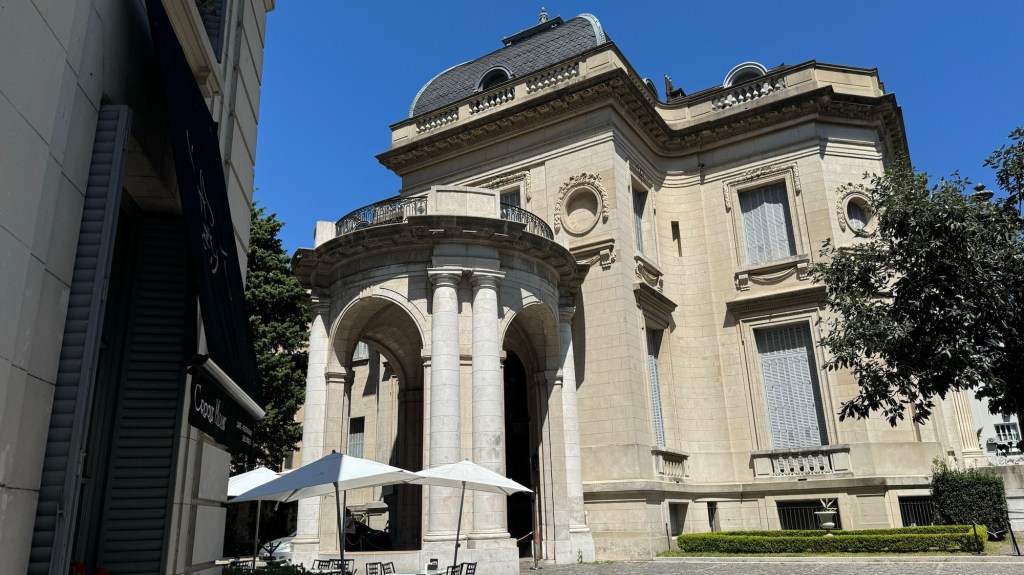
Today was the first time I walked in, during one of my intuitive walks. The kind where you get lost in the city and go in the direction that feels right. No resistance. Bright. I call it the gym of intuition.
The museum, despite being so bright and classical in Greek architecture, the inside is surprisingly, rather dark.
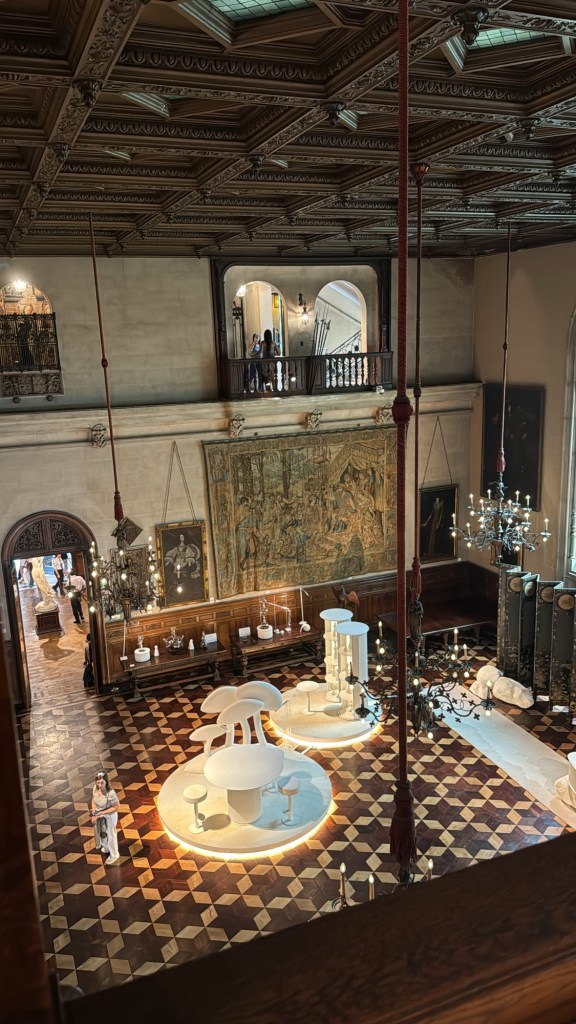
The interior is reminiscent of those lives of wealth that seem glorious and shiny from the outside, yet within, dark secrets reside. The type of secrets that emerge, when the excess of wealth causes for a new disharmony to be at play.
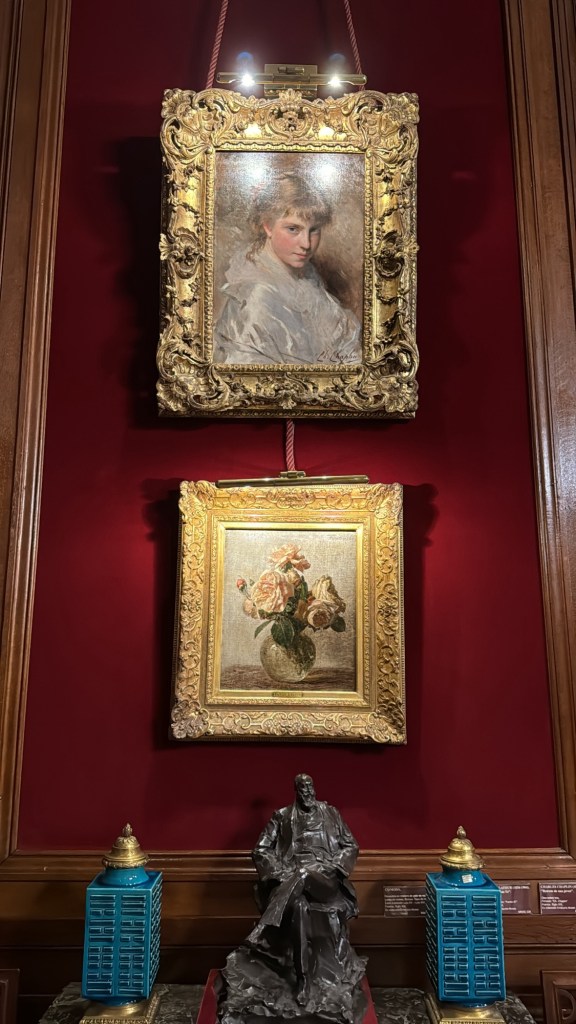
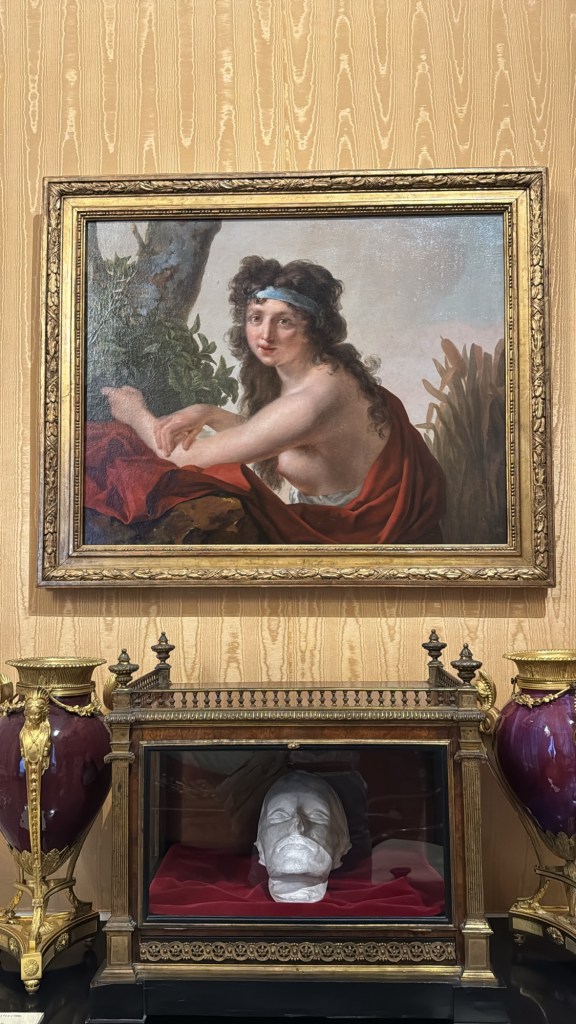
Inside, the place felt like an entire art history textbook come to life. French aristocracy. Asian art from the Ming Dynasty. The Habsburg jaw. Napoleon’s funeral mask. The sculpted head of Louis XIV. Rodin. I was amazed.
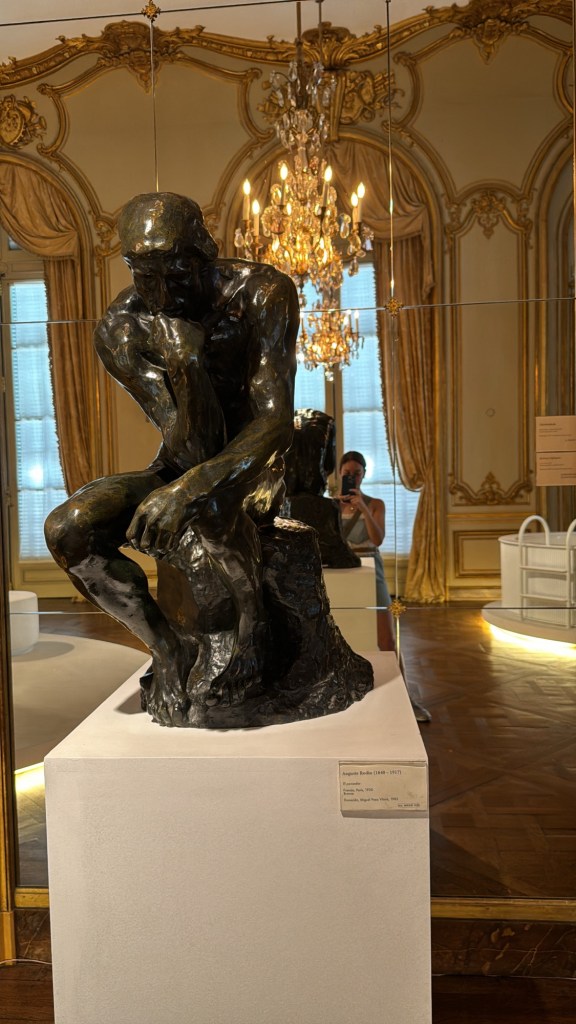
How did all of this art end up in Argentina?
Was this a Noah’s Ark precaution during World War II? Was European art brought to Argentina as a preventative measure?
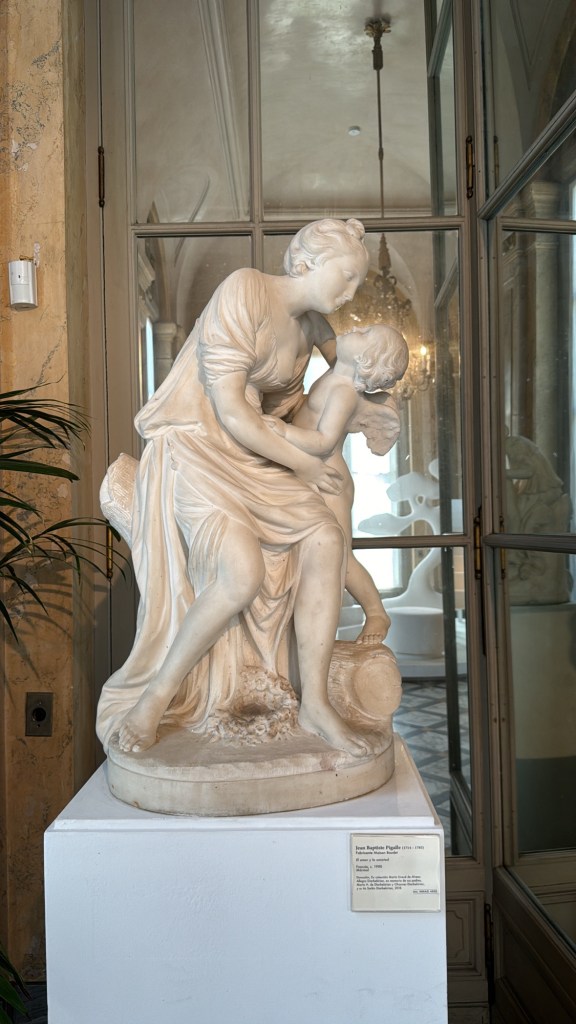
I was stunned by the sheer amount of historical art, primarily from French artists. Russian countesses painted by the French. I began to wonder as I observed the painting of the Russian aristocrat, “throughout history, are the humans that survived harsh conditions, birth risks, and being born into wealth, the DNA that was chosen to continue our species?”
This collection that felt both breathtaking and heavy, intensified by the darkness of the rooms.
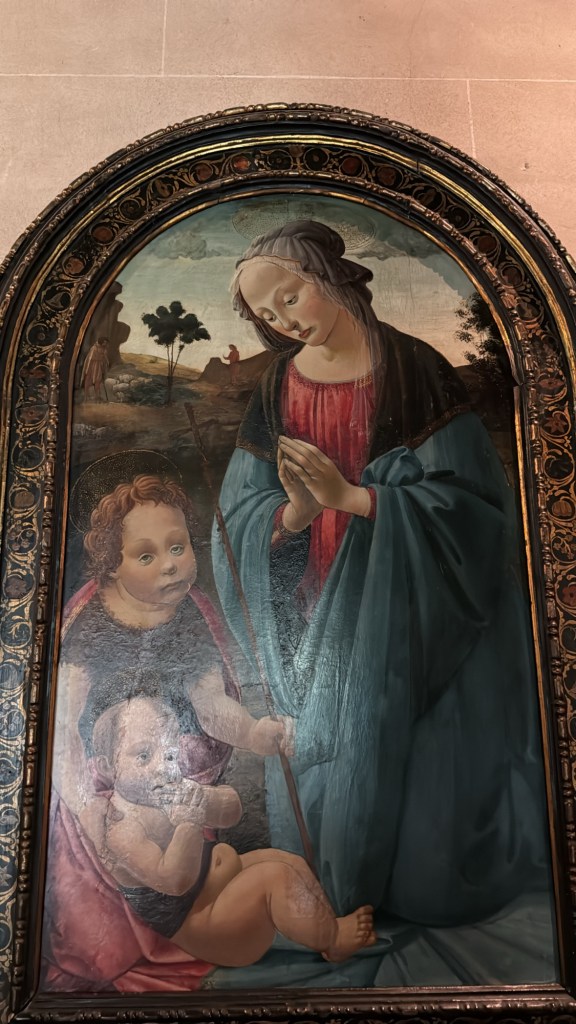
Argentina’s “civilization” came from the conquest of Native purity with the intent of a colonialism of Catholicism.
However, it is astonishing to witness such wealth in juxtaposition with a city that now holds so much poverty.
On the Subte, there are people who sing and play the guitar for a mere $1,000 donation: about seventy five cents.
How did Argentina go from such immense wealth to instability?
Could it be that when a foundation is energetically corrupt, the natural laws of existence drive the future to replicate its dark origin?
Or is this the inevitable cycle of greed, wealth, and the consequences borne by the remaining ninety nine percent of the world?
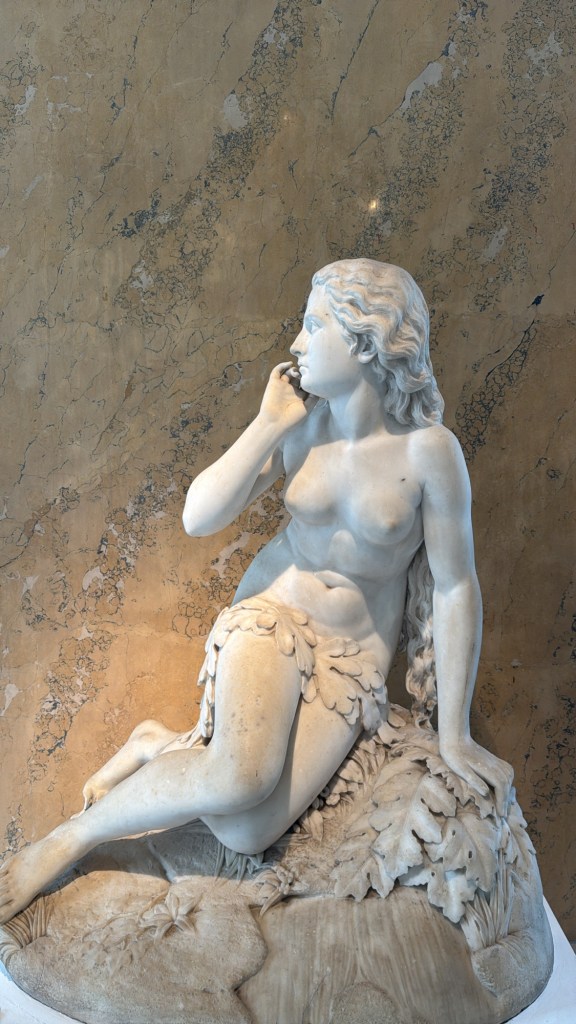
What makes this exhibition so powerful is not just what it shows, but where it lives.
Inside the Museo Nacional de Arte Decorativo, a palace built to embody permanence, lineage, and European ideals of order. The exhibition quietly disrupts time. The exhibition listens to the past.
It places contemporary forms such as organic, circular, almost primordial inside rooms designed for hierarchy, symmetry, and control.
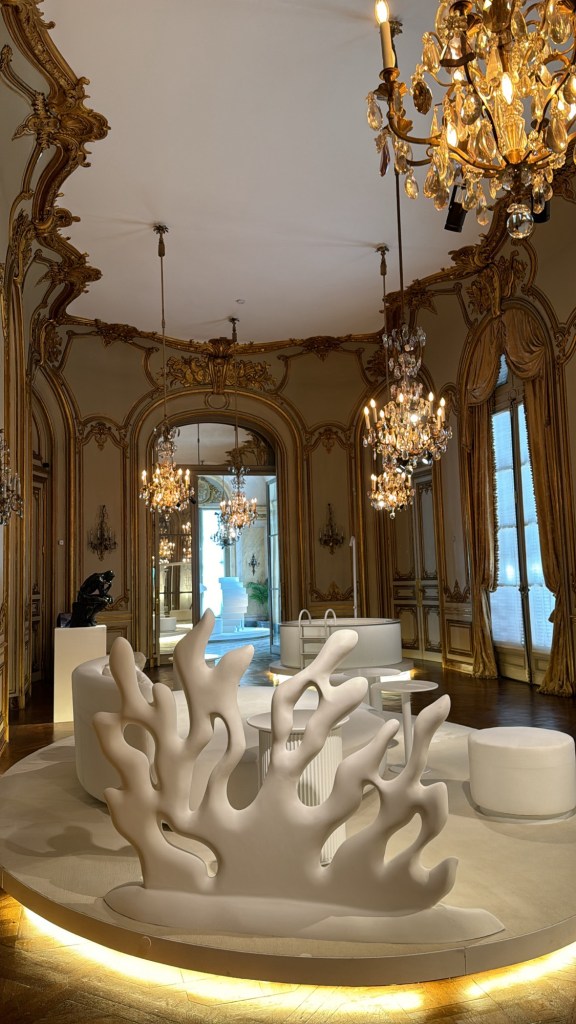
And in placing this juxtaposition, it creates a dialogue rather than a rupture.
The palace carries memory in its walls: empire, extraction, inherited wealth, frozen power.
Spaces once designed to perform status, such as the garden (jardín) and dining room are reinterpreted as archetypal zones of being: nourishment, gathering, transformation.
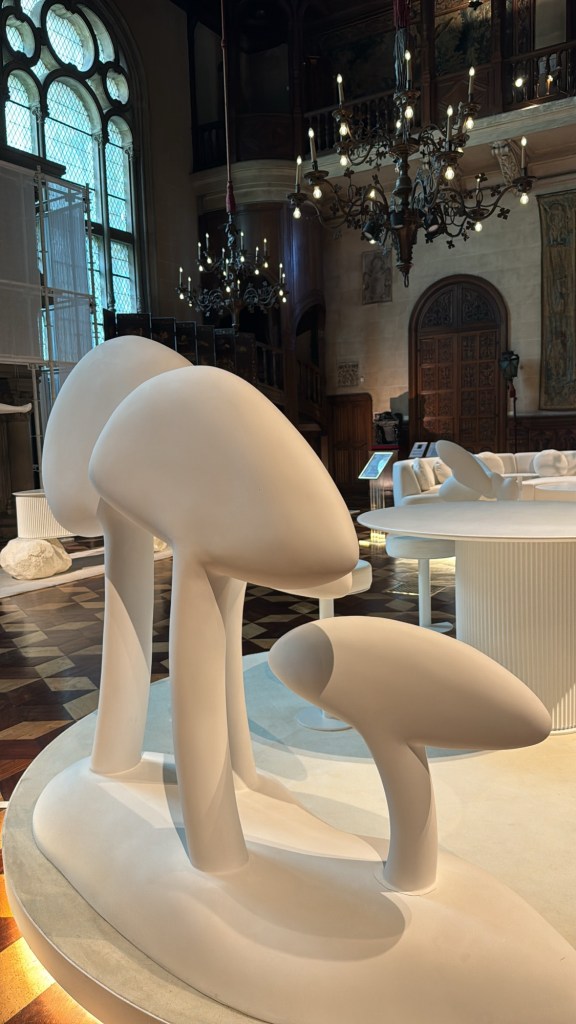
The objects feel less man-made designed and allude to the beauty of nature by default. The cycle of growth. Shapes echo roots, fungi, stone, planetary orbits.
The body reappears. Nature re-emerges into spaces once ruled by the elite.
Where the building speaks of accumulation of wealth, the exhibition speaks of return to nature.
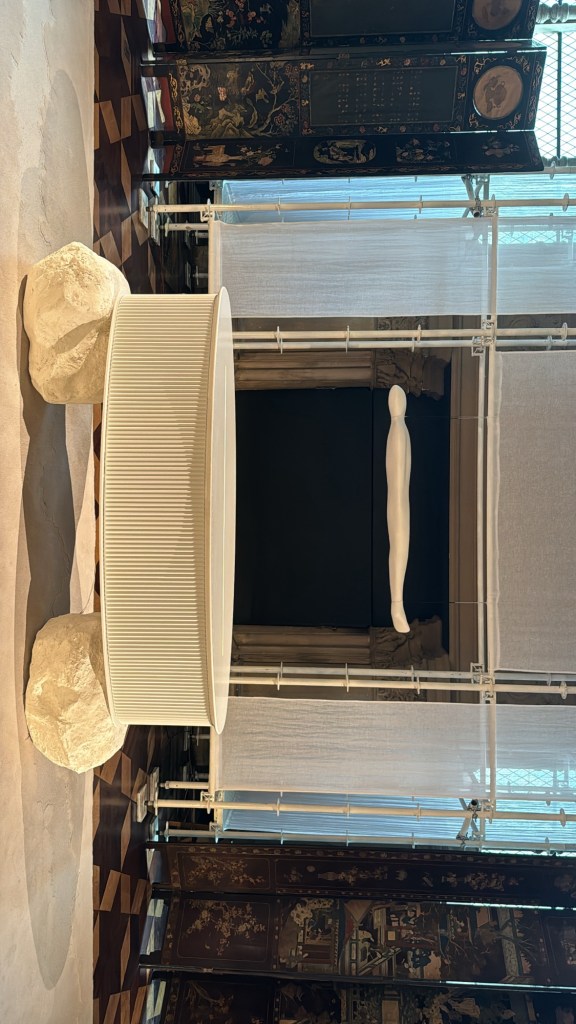
The message is subtle: the future is not ahead of time, it is
beneath us,
within us,
behind us,
waiting to be remembered.
There is an awakening happening, quietly. Not confined to Buenos Aires, not just in art spaces, but collectively.
A remembering that wealth without soul hollows itself out.
That brilliance without roots collapses.
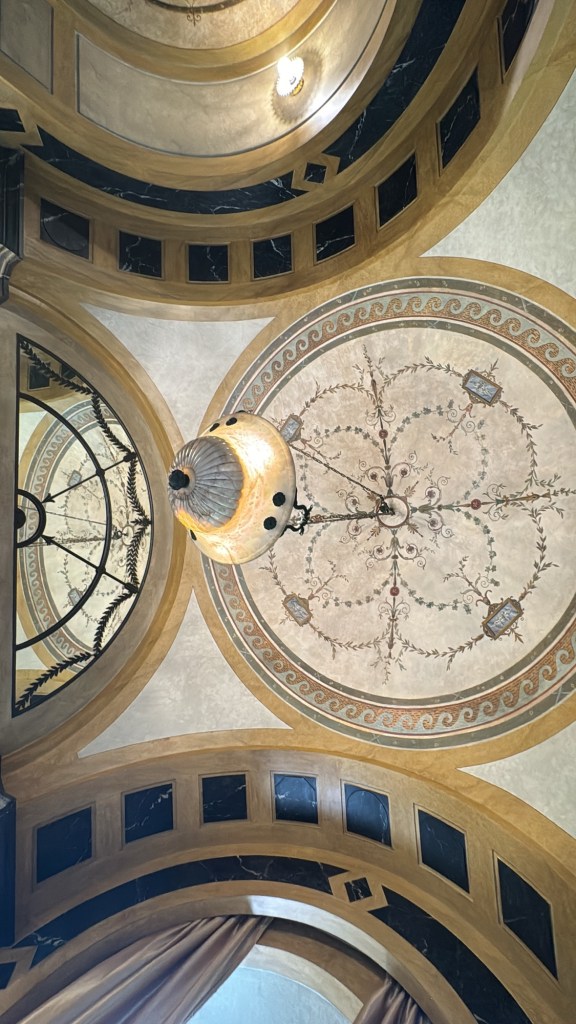
That systems built on energetic corruption eventually decay, no matter how ornate their ceilings.
The exhibition feels like a circle of coming back home. A gentle recalibration. A signal that after centuries of fragmentation, the collective psyche is being guided back toward coherence: back to nature, back to the body, back to ritual, back to joy.
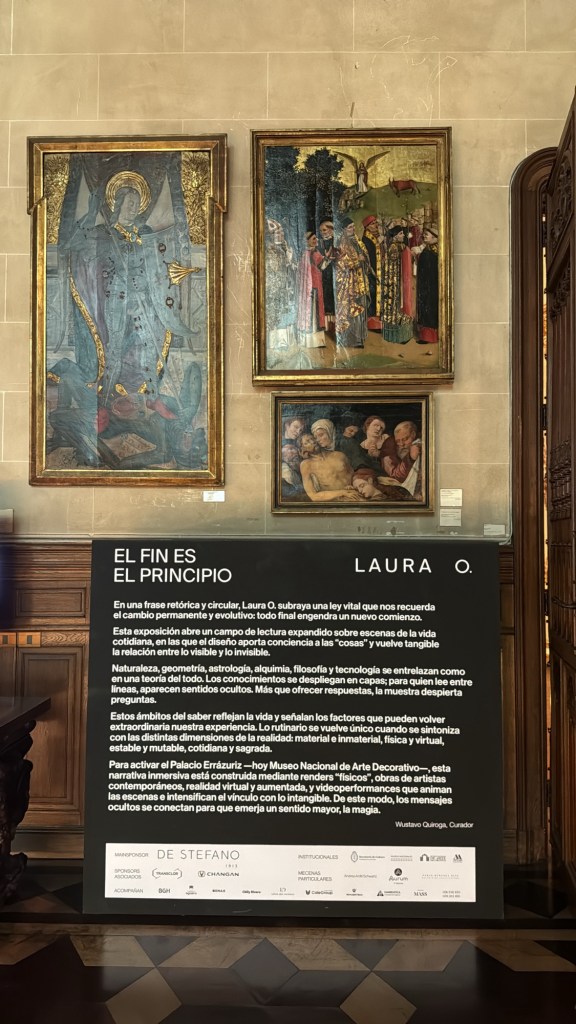
Back to the eternal soul that was never lost, only obscured and always available to us all, rich and poor.
History, just as time, continues and is not ending. It is composting and evolving into something more subtle, genuine, and more alive is beginning to grow.
Not outside of us in the external world of physical riches.
But from within.
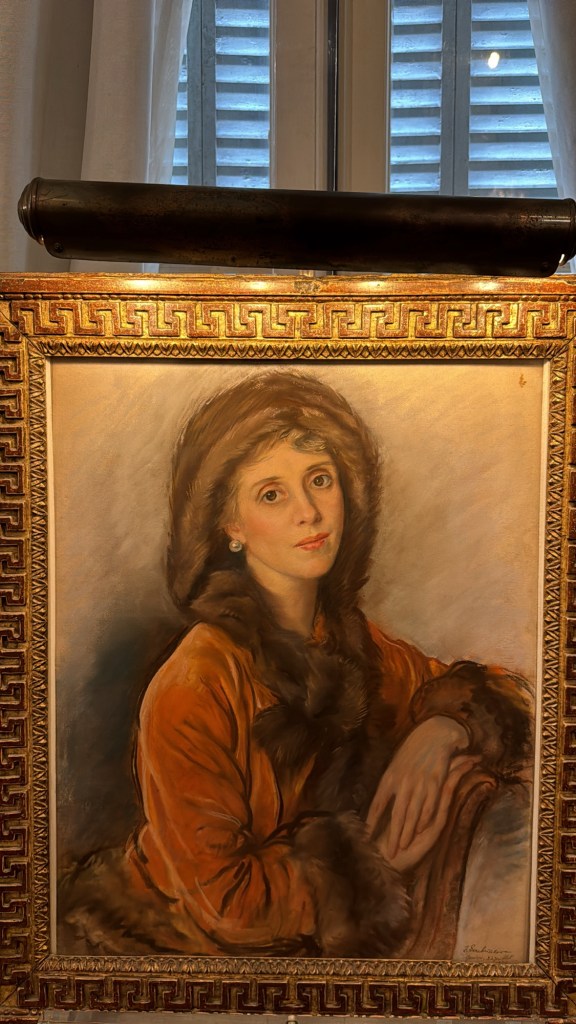
Earlier that day, in one of those Sunday morning walks, I encountered the mural of The Emperess, of the major arcana cards from tarot. A mystical practice that has lived parallel in history of alongside man above nature: from the Renaissance, to Russian and French aristocracy, to the Empires of China, and the Gilded Age.
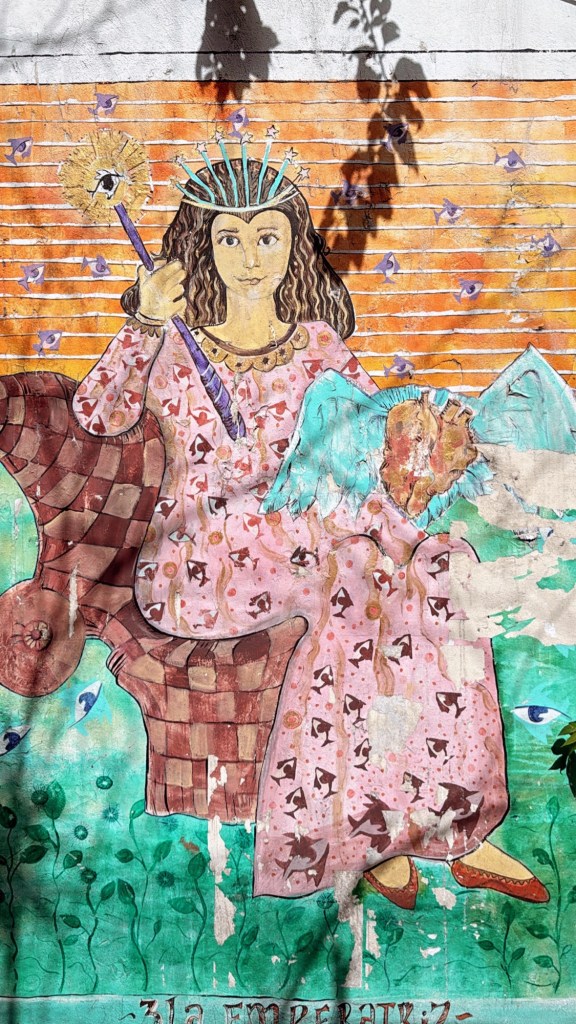
Above, a mural is not painted by a French artist commissioned by patrons of the Elite; but rather, painted by a commoner artist living in San Telmo, a place where the foundations are of the working class of the Argentine ports.
Perhaps it is time the ruling elite learns a lesson from the other side of the coin: a life striped of wealth yields an evolution of the soul. From ego to self, from wealth to commoner, from materialism to back to nature. Alas, the inevitable cycle of transformation of Mother Nature.

Leave a comment